Notes on the visit to the Commission and the draft Public Procurement Act proposal
I had the pleasure of visiting the Commission yesterday alongside a number of procurement colleagues to meet with the team working on the Procurement Act and the Executive Vice-President of the Commission, Stephane Sejournee. The meetings were held under Chatham House rules meaning that while we can talk about the meeting(s) we cannot disclose what was actually discussed (strict interpretation of the rules!).
What I can safely say is that the meetings were very helpful to understand the thinking and logic behind the reform. The team is large, knowledgeable and engaged. Huge difference vis-a-vis the 2011-ish Commission. I left convinced the reform was in good hands this time around.
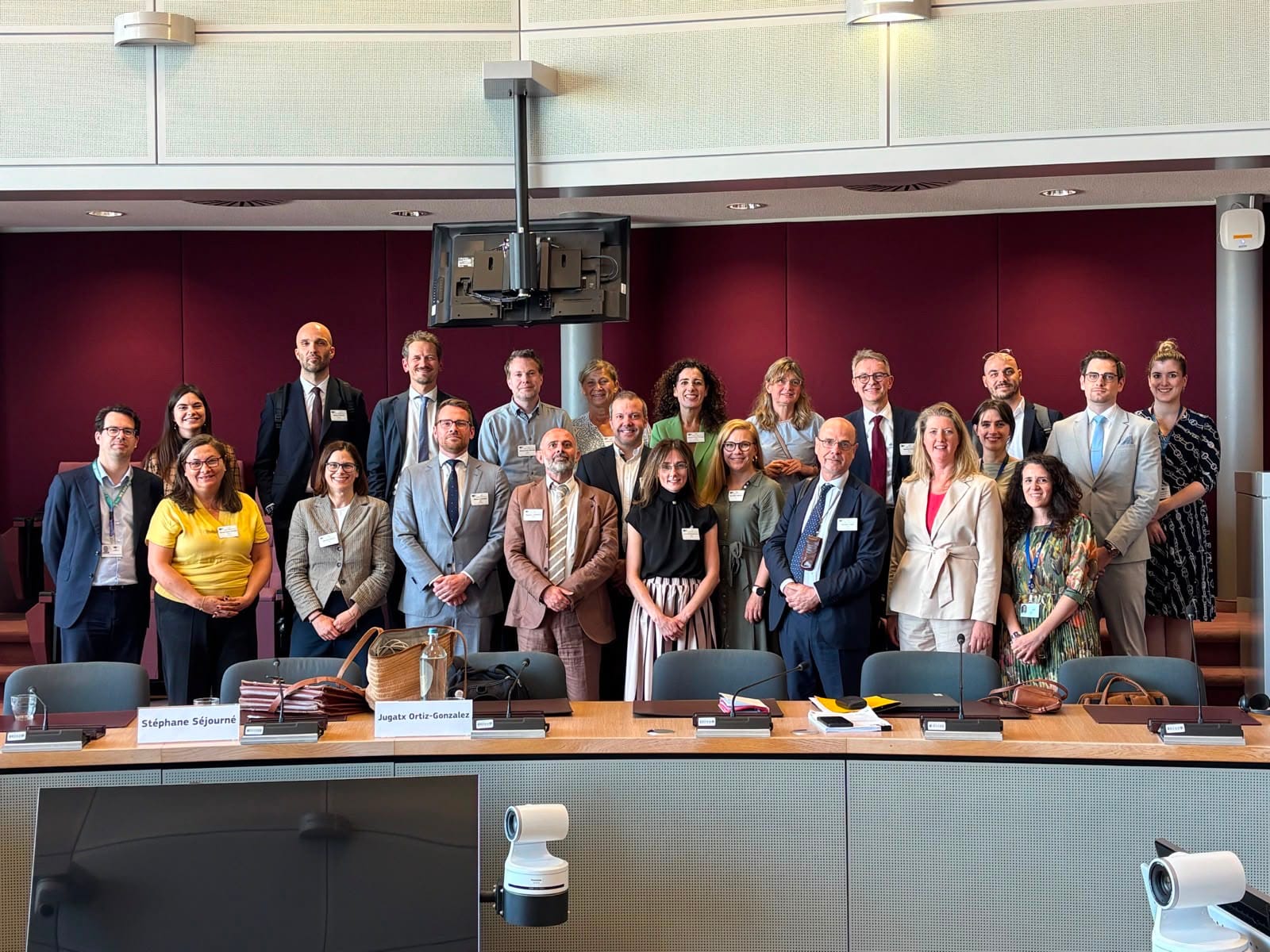
Because of the Chatham House rules mentioned above, the rest of this post is going to be based on what I had seen from the leaked proposal and that I had drafted before yesterday's meeting.
My first comment about the draft Public Procurement Act is that it is good, frankly, very good. I have to say the Commission understood the assignment that the current ruleset is no longer fit for purpose and went to town with it. Over the last few months I heard rumblings from colleagues that "there is no one there [at the Commission] who understands procurement." I think the current draft proves the statement wrong and exposes the implicit criticism as unfair. Clearly the team working on this new what they were doing and even if we can find points to gripe with or disagree with the direction of travel, the level of internal coherence and logic is not compatible with lack of knowledge about the topic.
With that in mind I would humbly recognise as well that my own criticism over the years no longer applies. Over the last decade I have bashed the Commission time and time again (direct cross-border numbers, general lack of ambition, the digital procurement mess from 2014, the Kolin non-paper). It is fair to say I do not have a reputation as a Commission shill, and have the receipts to prove it including a shouting match with a senior official on the back of cab on the way to the airport after a conference. my praise is earned. So, credit where it is due, this is in general a fantastic piece of work that shows how my own criticisms no longer holds water. It is fresh, bold, ambitious and designed from the ground up for today's world and not the 20th century. A complete redesign unconstrained by the sunken costs of previous policy/legislative decisions. My personal bugbear of path dependency has been broken. As a colleague put the other day, this is a whole new discipline being born. It is exciting and what we needed in EU procurement.
For this first post on the leaked Public Procurement Act proposal I am focusing my (brief) comments on three main areas: procedures, exclusions and the digital infrastructure.
Procedures
The "going back to the drawing board" approach is very evident on how the procedures are being handled in the leaked proposal. Gone are the long list of procedures, replaced with three procedures. This is not the extent of the cull that we observed with the Public Procurement Act 2023, but it is close. Realistically we do not need more procedures, especially bearing in mind the optionality included.
From where I am standing, good riddance to the old procedures. Negotiations which were always the wet dream from the UK since the late 90s (and the reason competitive dialogue was introduced in the first place in 2004) have been delivered as a default approach after the UK's departure from the Union. Oh, the irony.
Exclusions
One of the changes I was most surprised to see is with exclusions and their separation from the procurement procedure itself (ie, from the hands of the contracting authority). I first argued for this on the run up for the Procurement Act 2023, since it is an obvious simplification win for a procurement system. Taking them out of the hands of the contracting authority and centralising them definitely reduces the workload of contracting authorities and moves any disputes outside of the procurement process as well. Win-win and forces governments to handle themselves what is a policy objective that is important for them and mostly irrelevant for contracting authority. Having said that, I would have preferred all exclusions to be mandatory, abolishing the category of optional ones. Either an economic operator breaches exclusions grounds and thus should be automatically excluded, or it does not. Discretionary exclusions breach the logic of the system.
Digital infrastructure
I have long argued that the handling of the digital infrastructure (or e-procurement as we called it back then) was the singular key mistake of the 2014 reform. It is unambitious, assumes procurement is an isolated island that does not need any connection beyond the confines of the contracting authority and simply moves to an electronic format what was before done in paper. Basic digitisation, no digitalisation and certainly no digital transformation. We are paying the price for the poor policy choices from 2011-2014 to this day.
In the draft proposal all of those mistakes are consigned to the dustbin of history. It shows exactly what we need to be doing today to harness the benefits of digital systems and the importance of their interoperability. Bonus points for also realising that the electronic platforms are the weak point of the system and one that has sat out of view for too long. Improving the oversight and enforcement on this space is more than welcome.
There is time to look at the nitty gritty details and to find pain points in the draft (thresholds I'm looking at you!), but for now I would like to end this first entry on a fairly positive note. This is a great piece of work and I wish godspeed to the Commission in staying the course in light of the inevitable backlash it will generate. Change is not easy.
PS: Congratulations to Croatia, Finland and Portugal for having just passed significant reforms to their national procurement legislation. Great timing, folks.