The draft proposal for the Public Procurement Act has leaked
Linkedin (well, its procurement law niche) was on fire yesterday with the news that the draft proposal for the upcoming Public Procurement Act had leaked. The proverbial procurement cat is out of the Commission's bag just before the summer break and well in advance of the expected formal publication of the draft proposal in early September.
Beyond the nitty gritty details of whatever is inside the leaked proposal, the leak itself has confirmed something of importance: the choice of legislative instrument for the procurement reform. While a Public Procurement Act was included in the Commissions Work Plan for 2026, implying it would take the form of a Regulation, there had been no formal confirmation about the choice of legislative instrument until now. In fact the last few months have been fertile in backwards and forwards rumours that it was going to be a Regulation, then a Directive and vice-versa. I am assuming here the leak is real and not simply a trial balloon to be shot down with a draft Directive hidden in the depths of the Berlaymont!
It would be in poor taste for me to goad or repeat the arguments I have made since 2019 that using Directives as the choice of legislative instrument were hampering the achievement of the rules main goal, that is the opening of the single market. This criticism holds true also for whatever other objectives policy makers would like the rules to achieve. A Regulation is the superior legal instrument to pursue policy objectives. Directives are simply a second best solution to harmonise an area of law but without really unifying the rules that are applicable on a day to day basis. Directives are either a first step or a compromise, better than nothing because a Regulation would not be acceptable for the two co-legislators.
Moving from Directives to a Regulation is a key indicator things are indeed changing in public procurement. This will reduce the scope for member States to find ways to aham 'fine-tune' the transposition to suit their interests and in some cases to introduce differences where none should be in the first place. In some cases, even moving from a compliant transposition to a non-compliant one as it happened during the lifecycle of Directive 2014/24/EU for instance. It is unsurprising 17 member States were adamant to avoid the move to a Regulation and a sure sign that the change here is mostly for the better. Hiding non-compliance or actively exploiting potential non-compliance will become a lot more difficult going forward.
My expectation is that the Public Procurement Act will end up having a similar effect on compliance and respect for the (EU) rules similar to the GDPR a decade ago, including enhancing the practical relevance of the Court of Justice judgments. It is certainly possible that I am being too hopeful here and that this move will be more akin to the Medical Devices Regulation which has been a lot more problematic.
I am under no illusions that the transition will be difficult, painful and unpopular at the proverbial procurement coal face. All that nice talk about creating capacity and professionalising public procurement will suddenly be expected to be translated into reality. A Regulation will call that bluff and as Warren Buffett once said “[y]ou don’t find out who’s been swimming naked until the tide goes out.”
However, I do believe that a Regulation as legislative instrument opens up the possibilities of us ending up with a better designed procurement system at the end of the transition.
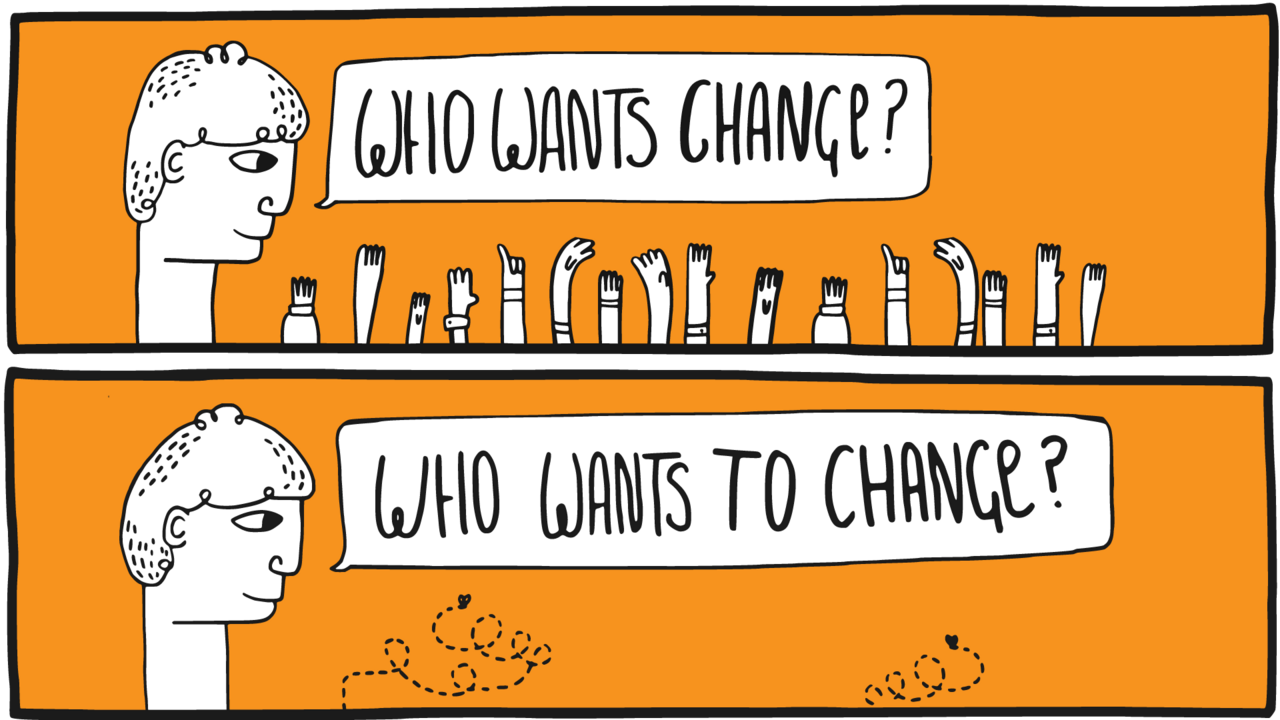
Perhaps this cartoon encapsulates better what I am getting at. Despite so many voices complaining about the existing procurement ruleset, change is difficult and no one likes it, especially when it is significant:

Anyway, from where I am standing I see this as a golden opportunity to transform public procurement law within the EU into a truly paneuropean or transeuropean discipline instead of a mostly comparative one of national silos. We will all be looking at the same text(s), going through the same problems and devising solutions for them. In short, I see procurement joining the "paneuropean legal league" where we can already find competition and state aid for example. While this may sound simply self-serving, I think the move to a Regulation will improve the standing of the discipline and give it the importance consummate with a set of rules influencing 15% of the EU's GDP.
Having said that, I expect the choice of legislative instrument has not gone down well with the member States since we know that at least 17 are dead set against it. So there is a not-insignificant risk that the reform will struggle to pass through the Council. Time will tell.